2019
Video HD — 120’ 8”, Color and sound
View

→ Solo show at Centro de Arte Dos de Mayo- CA2M, Madrid
→ “El Barro de la Revolución” Interview with Paloma Polo by Miguel Errazu and Alejandro Pedregal.
→ Censored: an archive of silenced voices. Laveronica gallery, Sicily. Curated by Marco Scotini.
→ THE EARTH OF THE REVOLUTION: Artist talk with Paloma Polo & Dara Bascara
→ PROYECTOR FESTIVAL PRESENTATION:
→ A propósito de “O Quilombismo”. O, ¿cuál es el problema de querer ser radical, pero haber dejado la política de lado?
Online viewing:
https://vimeo.com/354203983
Password: remoulding
What social conditions give rise to political change? This question propelled Polo’s immersion in the revolutionary movement in the Philippines. The work, coexistence, and filmic inquiry she undertook in a guerrilla front were the culmination of three years of research and reflection as she engaged in the political struggles of this country.
For more than five decades, the initiatives directed by communist communities in the Philippines have been neglected, censored, and often violently repressed due to their wilfulness to implement alternate socio-political and cultural modes of existence. The bonds she forged within these communities, and her subsequent commitment and solidarity with their struggle, facilitated her later integration in a guerrilla unit on the basis of her film project.
Building the revolution in the Philippines means growing collectively and singularly. The revolution advances to the extent that revolutionaries cultivate themselves and flourish, managing to effectively transform a common world. The work of the members of the NPA (New People’s Army), the armed branch of the Communist Party, is founded on three main pillars: 1_building up their organs of self-governance (“base building”), 2_ the implementation of agricultural revolution (to different degrees, depending on the region), and 3_military combat.
The ongoing Philippine struggle adheres to the communist tradition and is rooted in the revolutionary liberation movements that have combatted the colonial yoke for centuries. A strenuous revolutionary force emerges from the poorest communities, which are wilfully fighting to eradicate the ills that, from the revolution’s perspective, continue to ravage the country: a semi-colonial and semi-feudal society plagued with capitalist bureaucrats and relegated to a deindustrialization that forces the estate to consume imported merchandise and to continuously exploit cheap labour, while the plunder of natural resources orchestrated by international corporations in alliance with the government is rampant. An intense militarization and state repression render the Red zones almost inaccessible.
The NPA members that are featured in the film are not only guerrilla fighters, they are industrious and active builders of an alternate world, born out of cooperative work. Daily life in the camp is organized around educational and pedagogical projects, which are reinforced by the collective assessments. Their task is largely pedagogical, but they also serve entire communities as doctors, teachers, researchers, artists, mediators, administrators, farmers… This transformative process, gradually and existentially modelled as it surmounts setbacks and obstacles, can only take place and can only be thought if it is always in the making. In this sense, large swathes of remote rural regions have become a sort of laboratory of life.
Some notes on the making of the film:
This film is the first close up portrayal ever made of the Filipino revolutionary movement. Although a few documentaries had been done in the past.
By the time this film proposal was presented to the Central Committee of the Philippine Communist Party I had been trained and educated in the framework of the movement’s pedagogical programs, and more informally by my comrades. I had also studied and engaged to ongoing struggles against land grabbing and the encroachment on indigenous ancestral land rights in The Philippines. When pondering the project, my European education was positively considered. Namely, my awareness of the western gaze and its artistic language would favor the “translation” of political worldviews and practices we sought to reflect.
Realizing this film entailed going underground and the assumption of major security risks on the part of the Party. Moreover, the guerrilla fighters who voluntarily opted to show their faces in the film were putting their lives on the line if they ever decided to go above ground. The film project pushed through because the political leaders deliberating concluded that internationally conveying the principles and basis of the Filipino struggle was worth the major risks and logistical challenges this production required. Moreover, we would take advantage of my insertion in European artistic and cultural networks to facilitate the visibility and circulation of the film. I was in a position to publicly acknowledge my role as a film director in support of the struggle, being a European artist, and this sort of privilege would favor the visibility of the film, its connection to audiences and its projection in various activist contexts. I could move back to Europe, but a Filipino artist does not have such freedom of international movement, and would have very possibly been killed or imprisoned for such an undertaking.
My filming within in a guerrilla unit was unfortunately brought to a halt after a month and a half. It all went so fast and I was unable to negotiate my stay: the commander instructed me to immediately leave the red zone as a retaliatory offensive had been identified and I was not to engage in military combat, armed encounters nor be exposed to crossfire. My killing in this juncture would have been attributed by the Estate to the New People’s Army and the Party was not willing to take the slightest risk in this respect. I waited for months in Manila, hoping for a window of opportunity to go back and resume the filming but it was deemed too risky. Eventually I went to Europe, having been invited by a French institution to do a residency. All the while I longed for the chance to go back to the guerrilla front. In that situation, and due to the temporary detention of an Australian comrade, who had been refused entry by the immigration officers at the Manila Airport, a blacklist order surfaced, allegedly grounded on intelligence reports. It contained a list of 28 foreign activists and my name was on it. When this happened, any possibility of me returning to The Philippines vanished. After a while I decided to edit the film with the footage we had yielded in that sole incursion.
We had assumed that, once the film was released, I would not be able to return to the Philippines for security reasons. But we hadn’t anticipated that my entry would be banned in the course of its making.


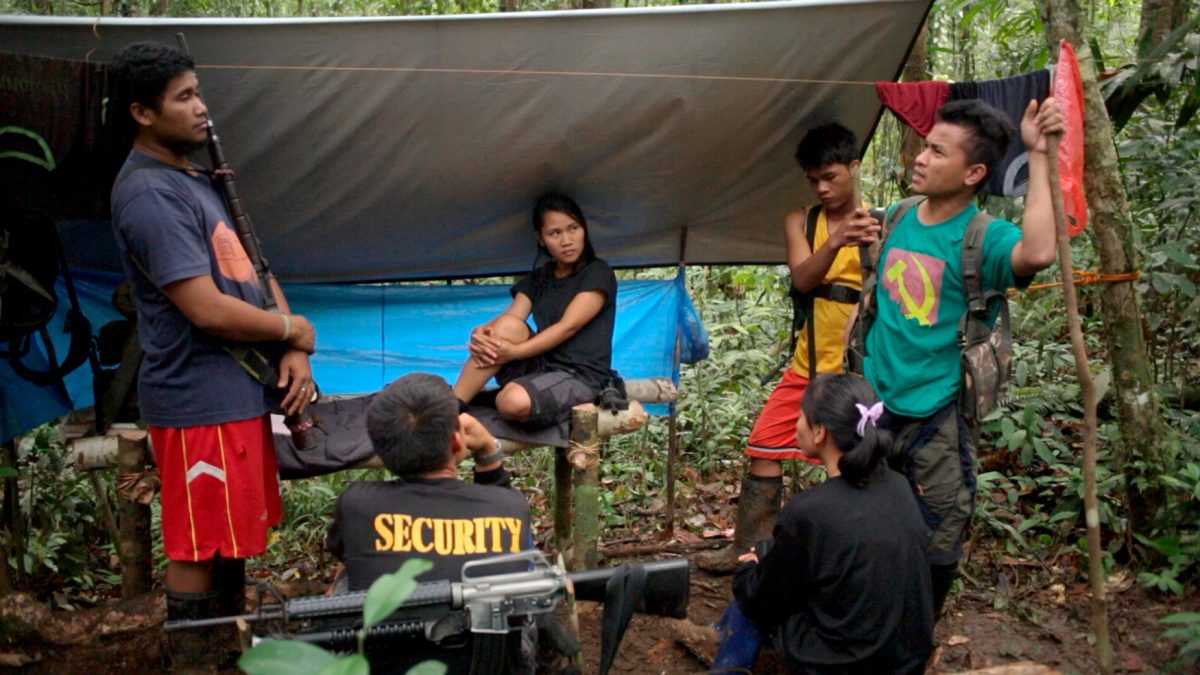


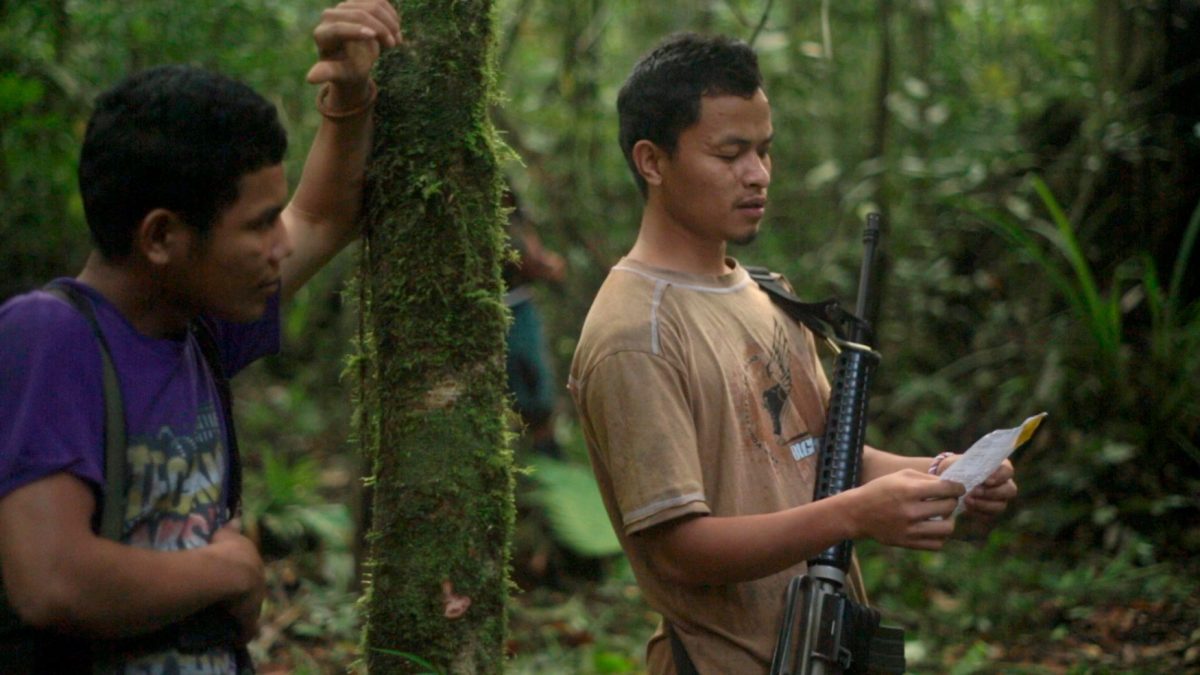


2019. Video HD
2019
2019. Series of drawings
2015. Video HD
2015. 40 inkjet prints on cotton paper
2015. Artist book
2015. Video HD


